 Earn

Description
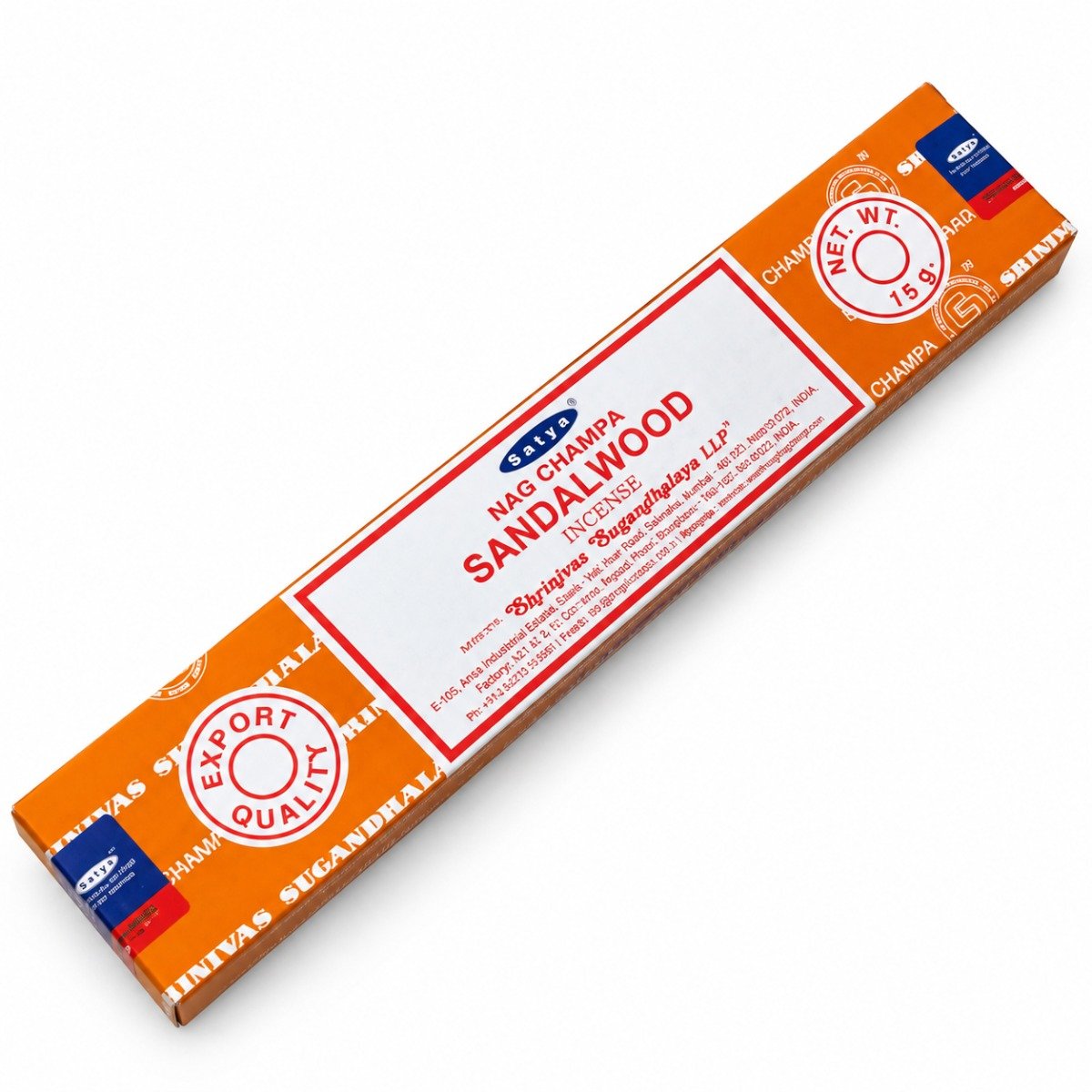
Satya Sandalwood Incense – Sandalwood for Meditation, Inner Peace and Spirituality
Satya Sandalwood Incense is a classic fragrance from the Indian tradition, produced by the renowned brand Shrinivas Sugandhalaya. Inspired by the aroma of sandalwood, it is distinguished by its soft, warm, and slightly sweet woody notes, which provide a welcoming and contemplative atmosphere.
This incense is especially appreciated for accompanying meditation practices, yoga, mantra recitation, and moments of reflection. Sandalwood has a deep connection to the spiritual traditions of India, where it has been used for centuries in religious ceremonies, offerings, and devotional practices.
Spiritual Meaning of Sandalwood
In Hindu tradition, sandalwood, known in Sanskrit as Chandana, is considered an auspicious substance, associated with purity, serenity, and devotion.
Sandalwood paste is traditionally applied to the forehead during certain religious practices and used in puja ceremonies as an offering to deities. Its aromatic and refreshing nature symbolically represents tranquility of mind and purity of intention.
Sandalwood is particularly associated with the worship of Vishnu and Krishna, although it is also used in different traditions dedicated to Shiva, Devi, and other deities.
Satya Sandalwood incense allows you to bring this spiritual inspiration into your daily life, creating an atmosphere conducive to prayer, contemplation, and inner connection.
How to Use Satya Sandalwood Incense
Light the end of a stick, let a small flame form, and gently extinguish it. Place it in a suitable incense holder, allowing the fragrance to spread throughout the room.
You can use it before meditation, during mantra recitation, in puja ceremonies, or simply to scent your home.
Its woody aroma blends particularly well with Japa Mala practices, silent meditation, and Yoga Nidra, in which tranquility and concentration play an important role.
Chakras Associated with Sandalwood
In contemporary interpretations of spiritual aromatherapy, sandalwood is often associated with Ajna, the third eye chakra, and Sahasrara, the crown chakra.
Ajna represents discernment, intuition, and the ability to observe thoughts without identification. The contemplative aroma of sandalwood can accompany concentration practices in this center.
Sahasrara symbolizes spiritual awareness and the experience of unity. The association of sandalwood with this chakra stems primarily from its long use in devotional and meditative practices.
These correspondences are symbolic and do not represent proven physiological effects of incense.
Ayurveda and Balancing the Doshas
In Ayurveda, sandalwood, especially white sandalwood, is traditionally described as a cooling substance associated with the pacification of Pitta.
Pitta is associated with the element of fire and with qualities such as warmth, intensity, and transformation. The gentle aroma of sandalwood can accompany serenity practices, especially in environments where tranquility and moderation are desired.
For Vata, associated with movement and irregularity, a woody scent can be part of a sensory routine of retreat, especially when combined with silence, comfort, and calm breathing.
For Kapha, which exhibits heavier and more stable qualities, sandalwood can be used during contemplative practices, although more stimulating aromas are often chosen when dynamism is desired.
These interpretations pertain to aromatic use and do not equate to the medicinal properties of sandalwood or sandalwood essential oil.
At home, it is especially suitable for a meditation room, yoga room, or relaxation space, provided there is adequate ventilation.
Vastu Shastra and Feng Shui
In Vastu Shastra, sandalwood is valued in religious practices and in the preparation of spaces dedicated to spirituality.
The northeast direction, known as Ishanya, is traditionally associated with contemplation, purity, and spiritual connection. Therefore, a small altar or meditation space in this area can be accompanied by the aroma of Satya Sandalwood incense.
In the tradition of contemporary Feng Shui, woody fragrances can be integrated into environmental harmonization practices. Sandalwood is particularly interesting for creating an atmosphere of serenity in spaces for rest and introspection, without replacing the classic principles of Qi organization and circulation.
Vedic Astrology – Jyotish and Sandalwood
In Vedic astrology, sandalwood has important connections to certain devotional practices and spiritual remedies, although its use depends on the tradition followed and the ritual context.
Chandra, the Moon, represents the mind, emotions, sensitivity, and the capacity for nurturing. White sandalwood, due to its traditionally refreshing nature, is used in some practices related to Chandra, especially when the aim is to cultivate serenity and mental stability.
Surya, the Sun, represents individual consciousness, vitality, authority, and the luminous principle. In certain ritual traditions, sandalwood paste is also used in offerings and devotional applications associated with Surya. Red sandalwood, known as Rakta Chandana, has its own ritual uses and should not be confused with white sandalwood.
Guru, Jupiter, represents wisdom, spiritual knowledge, guidance, and dharma. The use of sandalwood aroma during the recitation of mantras dedicated to Guru or during the study of sacred texts can symbolically accompany these qualities, without constituting an exclusive planetary correspondence.
Satya Sandalwood incense can thus accompany the recitation of mantras such as Om Namah Shivaya, Om Namo Narayanaya, or other traditional mantras, according to personal devotion.
It is important to distinguish the traditional ritual use of sandalwood from the use of commercial incense with a sandalwood fragrance. The latter does not replace specific substances prescribed in Vedic ceremonies or astrological upāyas.
Satya Sandalwood incense is a choice for those who appreciate woody fragrances inspired by Indian scents and seek to create a tranquil atmosphere for meditation, prayer, or moments of contemplation.
Always use in a heat-resistant incense holder, in a well-ventilated area and away from flammable materials. Never leave a lit stick unattended.
If you have any questions regarding this product on the Templo de Buda website, you can contact us via WhatsApp , email , Instagram , or Facebook.
RESALE
Special prices are available for resellers. You can see more here.


Reviews
There are no reviews yet.