

 Earn


Description
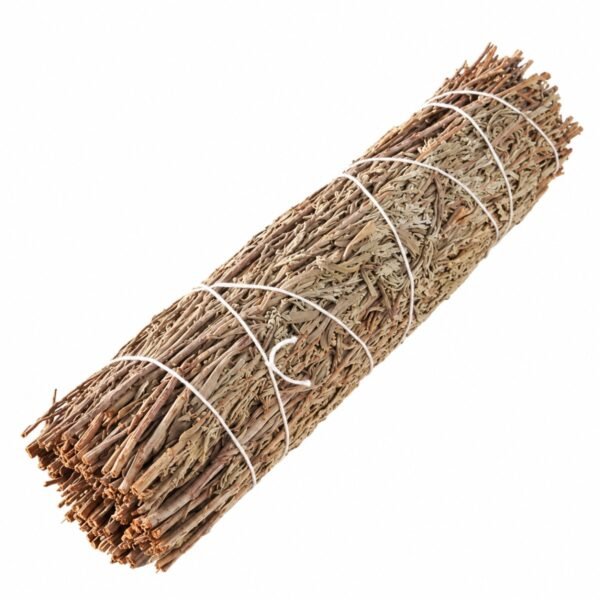
Shasta Sage Torch – Energy Purification, Protection, and Spiritual Awakening
Shasta Sage Torch is a natural element used in smudging rituals, meditation, and spiritual harmonization. Associated with contemporary traditions of energy purification, this plant is especially valued for its symbolic connection to Mount Shasta, a volcanic mountain located in Northern California, United States.
Enveloped in an atmosphere of mystery and spirituality, the Mount Shasta region has become a place of pilgrimage for people interested in meditation, contemplation of nature, and esoteric traditions.
Shasta sage is often described as having a milder and more delicate aroma than California white sage, making it a good alternative for those who prefer a less intense smoky experience. The aromatic experience can vary depending on the botanical species, drying process, and composition of each bundle.
Spiritual Meaning of Shasta's Sage
Mount Shasta holds a special place in various contemporary spiritual currents. In New Age esoteric traditions, it is often associated with the transformation of consciousness, inner wisdom, and the connection between Earth and the spiritual world.
Some of these currents relate Mount Shasta to Saint Germain, a spiritual figure associated with the Violet Flame, a symbol of transmutation, liberation from old patterns, and inner renewal.
Other spiritual narratives present the mountain as a planetary energy center, relating it to ancient legendary civilizations, such as Lemuria, and to Telos, an underground city described in certain esoteric works.
Within this symbolic context, Shasta Sage represents purification, withdrawal, and the conscious intention to release that which no longer contributes to inner balance.
Its use can accompany moments of change, the closing of cycles, the preparation of sacred spaces, or simply the creation of an environment conducive to tranquility.
How to Use the Sage of Shasta Torch
To perform a fumigation, carefully light one end of the torch. Let the flame burn for a few seconds and then gently extinguish it, allowing the leaves to release aromatic smoke.
Hold the torch over a heat-resistant container, preferably filled with sand, and slowly direct the smoke through the space.
You can begin at the entrance of the house and move through the rooms, maintaining an intention of serenity and renewal. During the ritual, you can mentally repeat a simple phrase, such as:
"May this space welcome peace, clarity, and harmony."
The Shasta Sage Torch can also accompany the preparation of an altar, a yoga session, or a meditative practice.
Finally, carefully press the lit end against the sand until you are sure it is completely extinguished.
The fumigation process should be carried out in a well-ventilated area, avoiding direct inhalation of the smoke. Avoid use near children, animals, people with respiratory sensitivities, or flammable materials. Never leave a lit torch unattended.
Chakras Associated with Shasta Sage
In contemporary energetic interpretation, Shasta Sage is especially associated with Ajna, Sahasrara, and Muladhara.
Ajna, the third eye chakra, represents intuition, discernment, and the ability to observe reality beyond habitual thoughts. Its association with Shasta Sage is related to the symbolism of spiritual awakening attributed to Mount Shasta.
Sahasrara, the crown chakra, symbolizes universal consciousness, contemplation, and the pursuit of spiritual unity. Incense burning can accompany meditative practices dedicated to silence and presence.
Muladhara, the root chakra, represents stability, security, and connection to the Earth. Although some contemporary esoteric traditions associate Mount Shasta with the planetary root chakra, this correspondence does not belong to the classical tradition of Yoga.
To complement the ritual, you can place an Amethyst next to the altar , symbolically associated with contemplation, or a Black Tourmaline , traditionally used in contemporary practices of protection and grounding.
Ayurveda and Balancing the Doshas
In Ayurveda, the use of aromas and plant substances should consider the qualities of the plant, individual sensitivity, and the context of the practice.
Shasta sage does not have a specific classification universally established in classical Ayurvedic texts. Therefore, the following suggestions refer to creating environments suitable for each dosha, and not to the therapeutic effects of its combustion.
For Vata, associated with air and ether, a stable and welcoming environment can encourage a routine of reflection. A brief smudging ritual is recommended, followed by a quiet practice of natural breathing and meditation.
For Pitta, associated with fire and water, it is preferable to use the torch moderately, in a cool and well-ventilated space. The ritual can be accompanied by a practice of contemplation or silent meditation, avoiding excessively hot environments.
For Kapha, associated with earth and water, preparing the space can be integrated into a morning routine, before gentle yoga movements or a mindful walk.
The ritual use of sage does not replace the traditional recommendations for diet, rest, and individualized lifestyle in Ayurveda.
Vastu Shastra and Feng Shui
In Vastu Shastra, the orientation and organization of spaces are related to the five elements, known as Pancha Mahabhuta.
The northeast, Ishanya, is traditionally considered a favorable direction for prayer, meditation, and contemplation.
The Shasta Sage Torch can be used symbolically to prepare a meditation space in this area of the house, provided there is adequate ventilation.
In contemporary Feng Shui, smudging is sometimes integrated into rituals for renewing the environment. It may be accompanied by opening windows, organizing objects, and removing anything that is no longer useful.
It is important to distinguish these contemporary practices from the classical schools of Feng Shui, in which the specific use of Shasta Sage is not a mandatory traditional procedure.
Vedic Astrology – Jyotish
In Vedic astrology, the Sage of Shasta does not have a documented classical planetary correspondence. However, its symbolism of purification and transformation can be contemplatively related to certain grahas.
Shani, Saturn, represents discipline, responsibility, perseverance, and maturation through experience. Its nature is associated with the passage of time, the acceptance of limitations, and the ability to abandon habits that no longer serve personal development.
On Saturdays, Shanivara can perform a small ritual to prepare the space before meditation and accompany this moment with the mantra Om Sham Shanaishcharaya Namah.
Ketu, the south lunar node, is traditionally associated with detachment, introspection, and liberation from material attachments. In the interpretation of a natal chart, its position can be relevant for understanding tendencies toward withdrawal, renunciation, and spiritual seeking.
The symbolic use of Shasta Sage can accompany a meditation on Aparigraha, the principle of non-attachment presented in Yoga philosophy.
Chandra, the Moon, represents Manas, the sensory and emotional mind. Its connection to inner perception makes it especially significant in practices of mindfulness of thoughts and emotions.
On Mondays, Somavara, you can use the torch to prepare the space before reciting the mantra Om Som Somaya Namah, traditionally dedicated to the Moon.
These associations are symbolic interpretations and do not constitute classic astrological remedies. In Jyotish, any individual recommendation depends on the analysis of the birth chart, including the position of the grahas, the houses, the aspects, and the planetary periods.
Saint Germain and the Violet Flame
In esoteric traditions connected to the Ascended Masters, Saint Germain is associated with the Violet Flame, presented as a spiritual symbol of transformation and transmutation.
The connection between Saint Germain and Mount Shasta is part of teachings developed in modern spiritual movements, especially from the 20th century onwards.
Those who identify with this tradition can use Shasta Sage as a symbolic element in preparation for a meditation dedicated to the Violet Flame.
During the practice, you can visualize a violet light enveloping the space, representing the intention to release repetitive thoughts and cultivate a more conscious inner attitude.
The Shasta Sage Torch is ideal for those who enjoy smudging rituals, meditation, altar preparation, and nature-inspired spiritual practices.
Its symbolic connection to Mount Shasta gives it particular significance among those who appreciate contemporary esoteric traditions.
Because it is a natural product, each torch has unique characteristics. The distribution of the leaves, the thickness of the branches, the color, and the shape may vary slightly from the photograph.
The spiritual properties described correspond to traditional or contemporary beliefs and interpretations, and are not scientifically proven effects.
Because they are natural torches, unique in their form and essence, they may present slight differences from the photo.
If you have any questions regarding this product on the Templo de Buda website, you can contact us via WhatsApp , email , Instagram , or Facebook.
RESALE
Special prices are available for resellers. You can see more here.


Reviews
There are no reviews yet.